Collection: DBT Worksheets

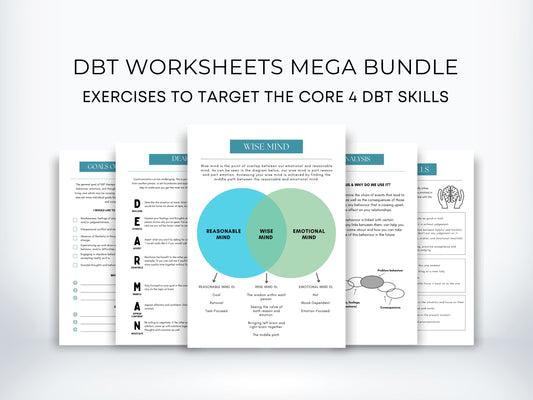
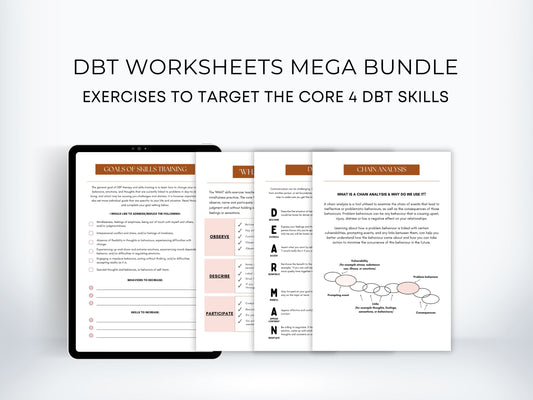
  • DBT Worksheets Mega Bundle

    45 Page PDF Digital Downloa...
    Regular price $19
    Regular price Sale price $19
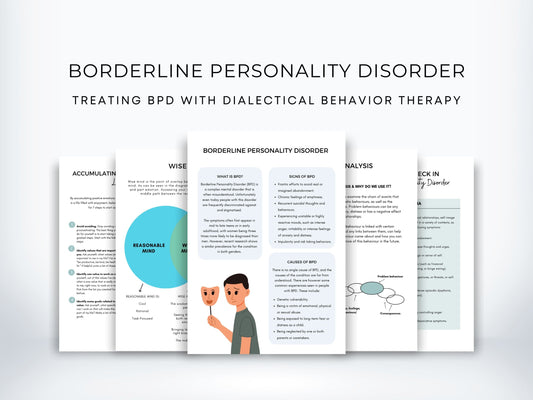
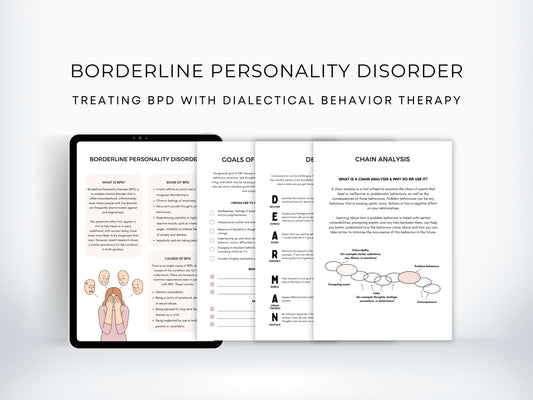
  • DBT for BPD Worksheet Bundle

    50 Page PDF Digital Downloa...
    Regular price $19
    Regular price Sale price $19
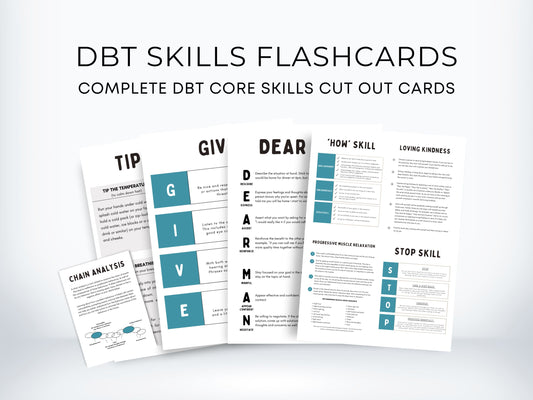
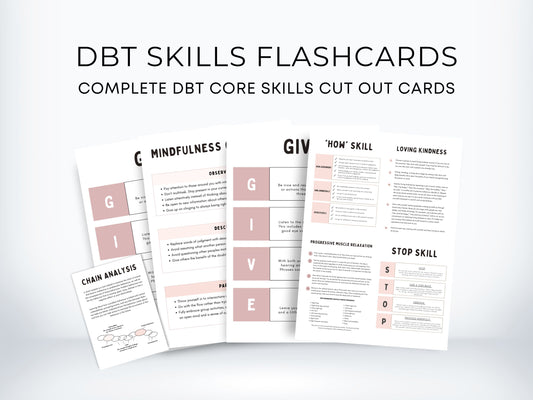
  • DBT Skills Flashcards Bundle

    46 Page PDF Digital Downloa...
    Regular price $19
    Regular price Sale price $19
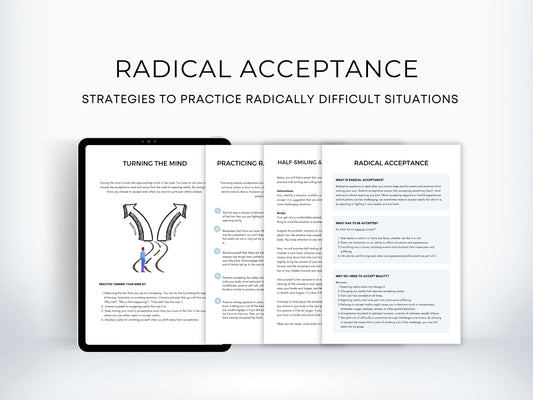
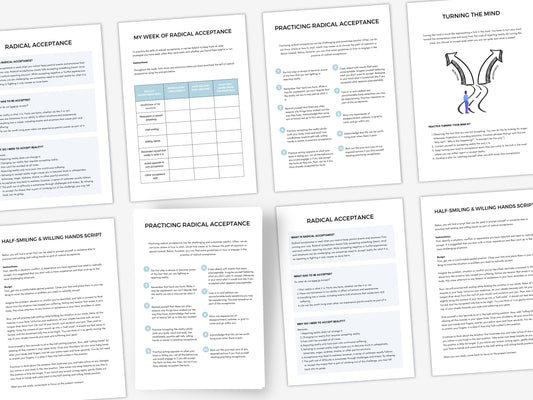
  • Radical Acceptance Therapy Worksheets

    5 Page PDF Digital Download...
    Regular price $3
    Regular price Sale price $3

Frequently Asked Questions

What is Dialectical Behaviour Therapy (DBT)?

Dialectical Behaviour Therapy (DBT) is an evidence-based therapy originally developed for borderline personality disorder that is now widely used for emotional dysregulation, self-harm, eating disorders, PTSD, and other presentations involving intense emotional responses. DBT combines cognitive behavioural techniques with mindfulness and acceptance strategies, structured around four core skill modules: mindfulness, distress tolerance, emotional regulation, and interpersonal effectiveness.

What are the four DBT skill modules?

The four core DBT skill modules are: Mindfulness (present-moment awareness and observing experience without judgement), Distress Tolerance (managing crisis situations without making them worse), Emotional Regulation (understanding and managing intense emotions), and Interpersonal Effectiveness (navigating relationships and communication effectively). DBT worksheets typically target one or more of these modules.

How can DBT worksheets support clients in clinical practice?

DBT worksheets provide structured frameworks for teaching and practising DBT skills between sessions. They help clients apply specific skills to real situations, track their use of coping strategies, and build the habit of using DBT techniques in daily life. Worksheets are particularly valuable for clinicians who deliver DBT-informed therapy without running a full DBT programme.

Are these DBT worksheets suitable for presentations other than borderline personality disorder?

Yes. DBT skills are highly transferable and are commonly used with presentations including eating disorders, self-harm, emotional dysregulation in ADHD and autism, PTSD, depression, and anxiety. The worksheets in this collection are suitable for any client who would benefit from structured skill-building in distress tolerance, emotional regulation, or interpersonal effectiveness.